




What’s it like raising twin boys? Danielle, a primary immunodeficiency patient, shares the journey of her first year as a mom. #WorldPIWeek https://bit.ly/3UsiFXN
Earth Day is 22 April
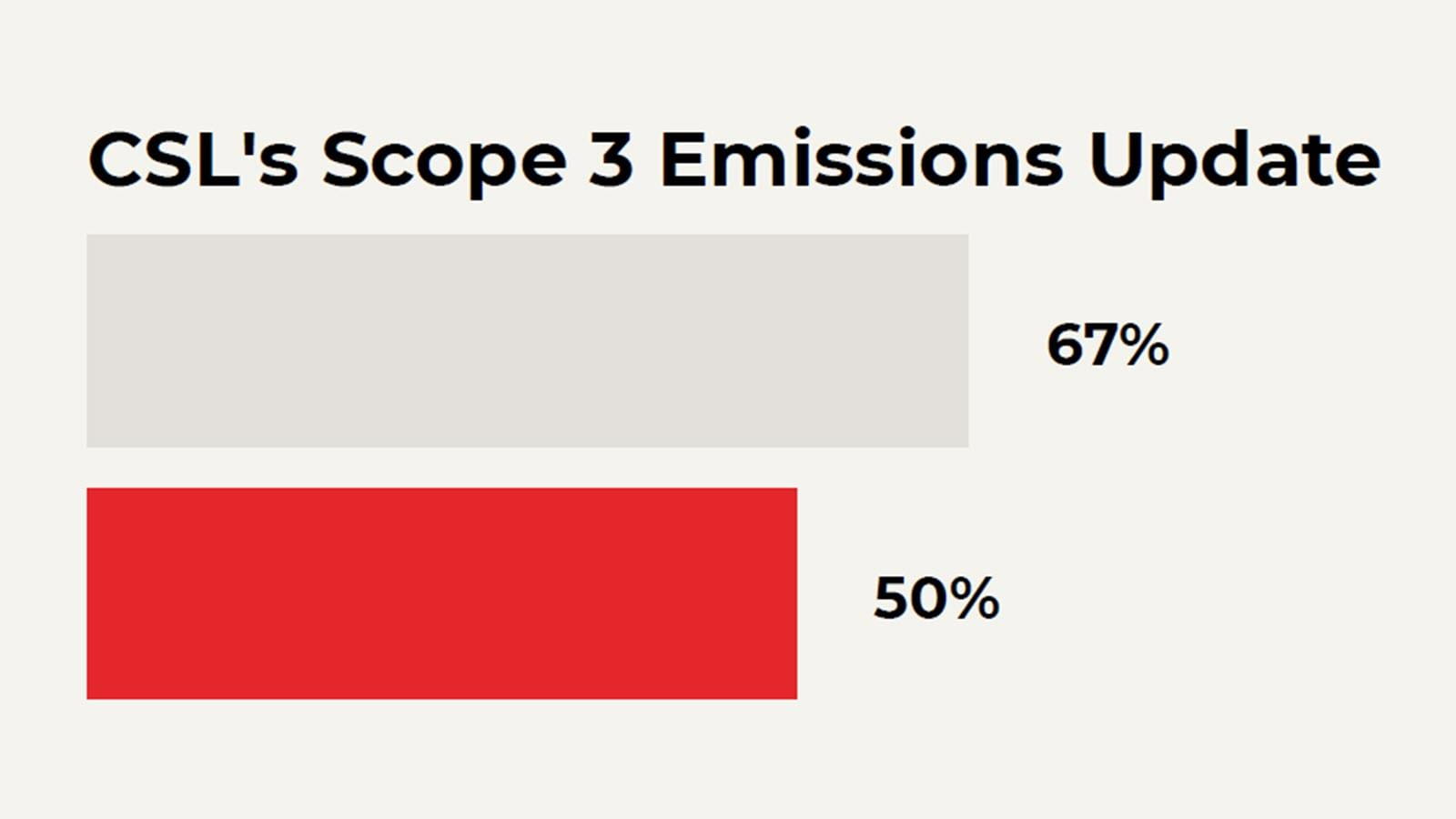
CSL reports progress on an important part of its environmental sustainability plan: getting vendors and suppliers to reduce their own carbon emissions.
CSL has Announced its 2024 Half Year Financial Results. Click here to read more →
CSL. Always Evolving for a Better World.
CSL has delivered biotechnology excellence for over a century. Today, with the combined expertise of CSL Behring, CSL Plasma, CSL Seqirus and CSL Vifor, CSL’s offerings are more diverse than ever to help ensure patients and people everywhere get the treatments they need. We’re always improving so life can, too.
Our Businesses and Products
CSL. Always Evolving for a Better World.
CSL has delivered biotechnology excellence for over a century. Today, with the combined expertise of CSL Behring, CSL Plasma, CSL Seqirus and CSL Vifor, CSL’s offerings are more diverse than ever to help ensure patients and people everywhere get the treatments they need. We’re always improving so life can, too.
Our Businesses and Products
CSL Behring. Leading the Way in Treating Rare and Serious Diseases.
CSL Behring is a global biotech leader with a broad range of biotherapies for rare and serious diseases including bleeding disorders, immunodeficiencies, hereditary angioedema, neurological disorders and Alpha 1 Antitrypsin Deficiency.
More About CSL Behring
CSL Seqirus. On the Front Line of Public Health Protection.
As the only vaccine company with a singular global focus on influenza, we work tirelessly on cutting-edge research, transformative technologies, and the latest methods of production and distribution. Together with our partners we’re on the front line every day, working to help protect communities from seasonal influenza and global pandemic threats.
More About CSL Seqirus
CSL Vifor. Changing the Game in Iron Deficiency and Nephrology.
The newest member of the CSL family, CSL Vifor is a global leader in iron deficiency and nephrology and is committed to launching the next generation of therapies to truly address the full spectrum of kidney disease, with a focus on dialysis and rare disease.
More About CSL ViforVita: Original Stories
'Vita' means life. It's also where we share the stories of biotech's promise to patients and public health.

Careers at CSL
We are committed to helping employees fulfill their career aspirations while working in a values-based culture. Are you next?

23 Apr
World Immunization Week, observed from April 24-30, emphasizes the importance of vaccination in safeguarding against preventable diseases. At CSL, our dedication to global health is reflected through our vaccines business, CSL Seqirus. Learn more about World Immunization Week here: https://bit.ly/4b7ZY0T #WorldImmunizationWeek #CSLSeqirus #CSL #WHO #vaccination #publichealth #globalhealth
23 Apr
23 Apr
We're thrilled to announce that CSL has been honored with the 2024 Handshake #EarlyTalentAward . This recognition celebrates our commitment to nurturing talent and providing exceptional opportunities for career growth. At CSL, we believe in offering more than just a job; we offer meaningful work that changes and improves lives. Join us in shaping your promising future: https://bit.ly/3Wb3qUb #CSL #PromisingFutures
22 Apr
Throughout World PI Week , we’ll be raising awareness and showing our support for people living with #PrimaryImmunodeficiency (PI). PI consists of rare or chronic conditions where a part of a person’s immune system is missing or malfunctioning, leaving them prone to infections. Learn more about PI: https://bit.ly/3UsZbCk .
22 Apr
🌎On #EarthDay , CSL shared progress on reducing carbon emissions created by its vendors and suppliers, a category known as Scope 3 emissions. https://bit.ly/49NjNK1
22 Apr
#MondayMotivation
21 Apr
Health care professionals hold a key role in boosting vaccine uptake. A study from the National Foundation for Infectious Diseases \(NFID\) reveals that patients are more inclined to receive their #flu vaccine when recommended by a trusted health care provider. At CSL Seqirus, we support proactive health care practices that empower patients to prioritize their well-being. Learn more about what we do: https://bit.ly/3Uc0i8b #CSL Seqirus #TogetherAgainstFlu #CSL #Vaccination #Influenza #DrivenByOurPromise #publichealth #HCP
19 Apr
From innovative treatments to lifesaving therapies, we're committed to improving lives and ensuring a healthier future for all. #Values
18 Apr
For people with chronic or underlying health conditions, vaccination against seasonal #flu is an important part of staying well. Along with our partners, CSL is committed to helping protect public health. CSL's vaccine business, CSL Seqirus, stands on the front line with partners in public health discovering, developing, and delivering pioneering vaccine solutions. Learn more about our mission: https://bit.ly/49ISZL1 #CSLSeqirus #Influenza #DrivenByOurPromise #publichealth
18 Apr
At CSL, Diversity, Equity, and Inclusion is fundamental to our mission and who we are. With the "Re-StartPlus" program, we at CSL Behring in Marburg have created a six-month pre-training program that focuses on diversity, inclusion and plays an important role in the development of a sustainable workforce. Together with our partners at Provadis, we are pleased to welcome eight program participants and to lay the foundation for their professional future as specialists in pharmaceutical production. https://bit.ly/3UigKVz #CSLBehring #PromisingFutures